When a Parent Refuses Assisted Living in Alberta: Signs, Options, and Family Guidance
|
ALBERTA • CALGARY • ASSISTED LIVING • MEMORY CARE • SUPPORTIVE LIVING • LONG-TERM CARE
When a Parent Refuses Assisted Living in Alberta: Signs, Options, and Family Guidance
|
|
Key Points
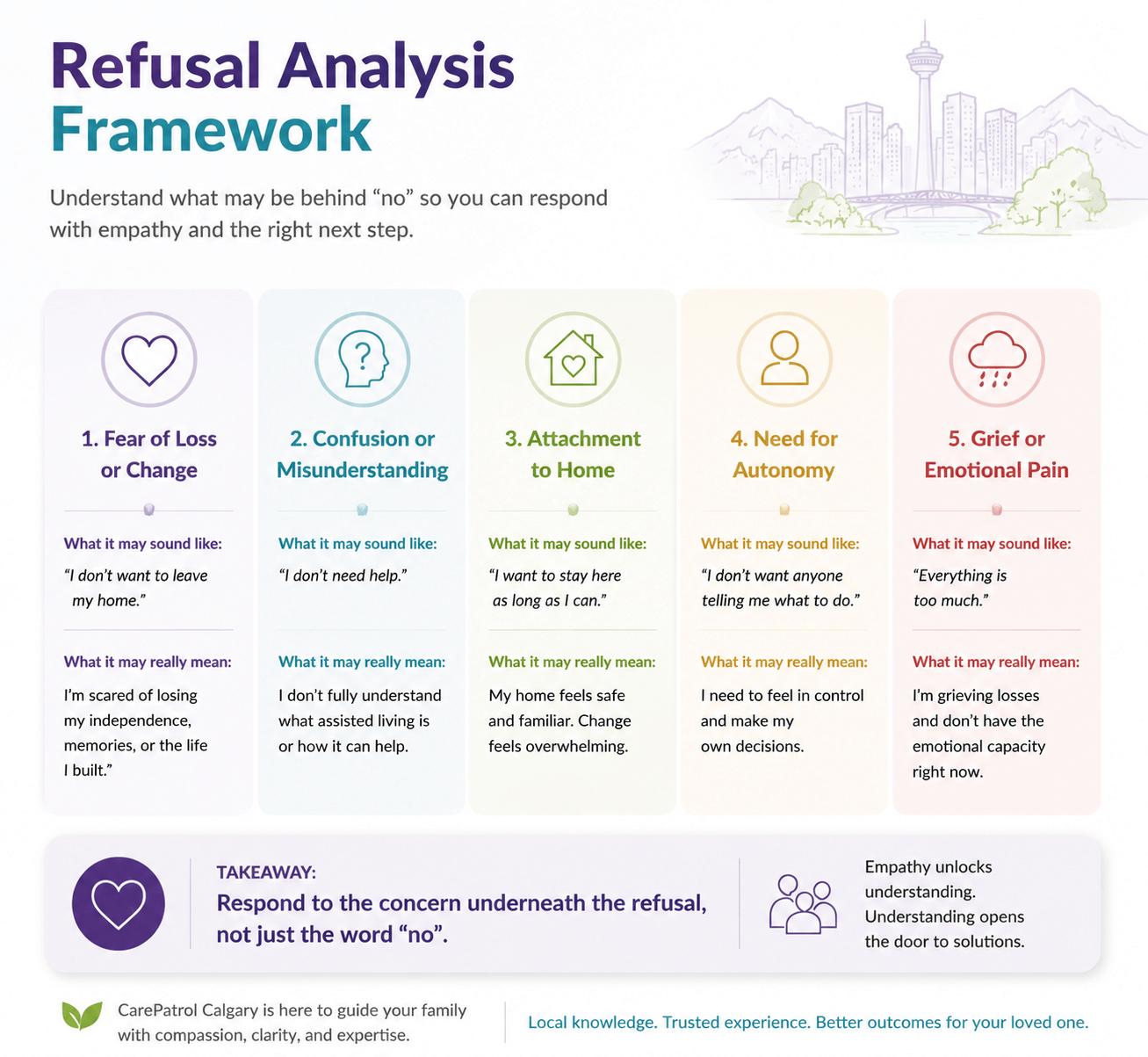
Who This Is ForThis guide is for Alberta families facing a parent, spouse, or older loved one who refuses assisted living, memory care, supportive living, or another senior care option. It is especially relevant when the family is seeing safety concerns, repeated falls, medication mistakes, caregiver burnout, confusion, hospital discharge pressure, or changes in daily function. If you are still trying to understand the right level of care, you may also find this related guide helpful: What Level of Care Does My Loved One Need in Alberta? Why Parents Refuse Assisted LivingRefusal is rarely about the building alone. Many older adults hear “assisted living” and immediately think of losing their home, their role in the family, their privacy, their routines, or their say in daily decisions. Some are grieving changes in health. Some are afraid of cost. Some are embarrassed. Others may not recognize how much their needs have changed. Many Calgary families tell us they thought the conversation would happen once. In reality, these discussions often happen gradually over weeks or months, especially after a fall, medication concern, wandering incident, caregiver exhaustion, or hospital discharge. A helpful starting point is to separate the words your loved one uses from the concern underneath. “I am fine” may mean “I do not want to feel old.” “I am not moving” may mean “I am scared I will never come home.” “You just want to get rid of me” may mean “I need reassurance that I still matter.” Warning Signs That More Support May Be NeededFamilies do not need to wait for a major crisis before asking questions. A pattern of smaller changes can show that a parent may need more support.
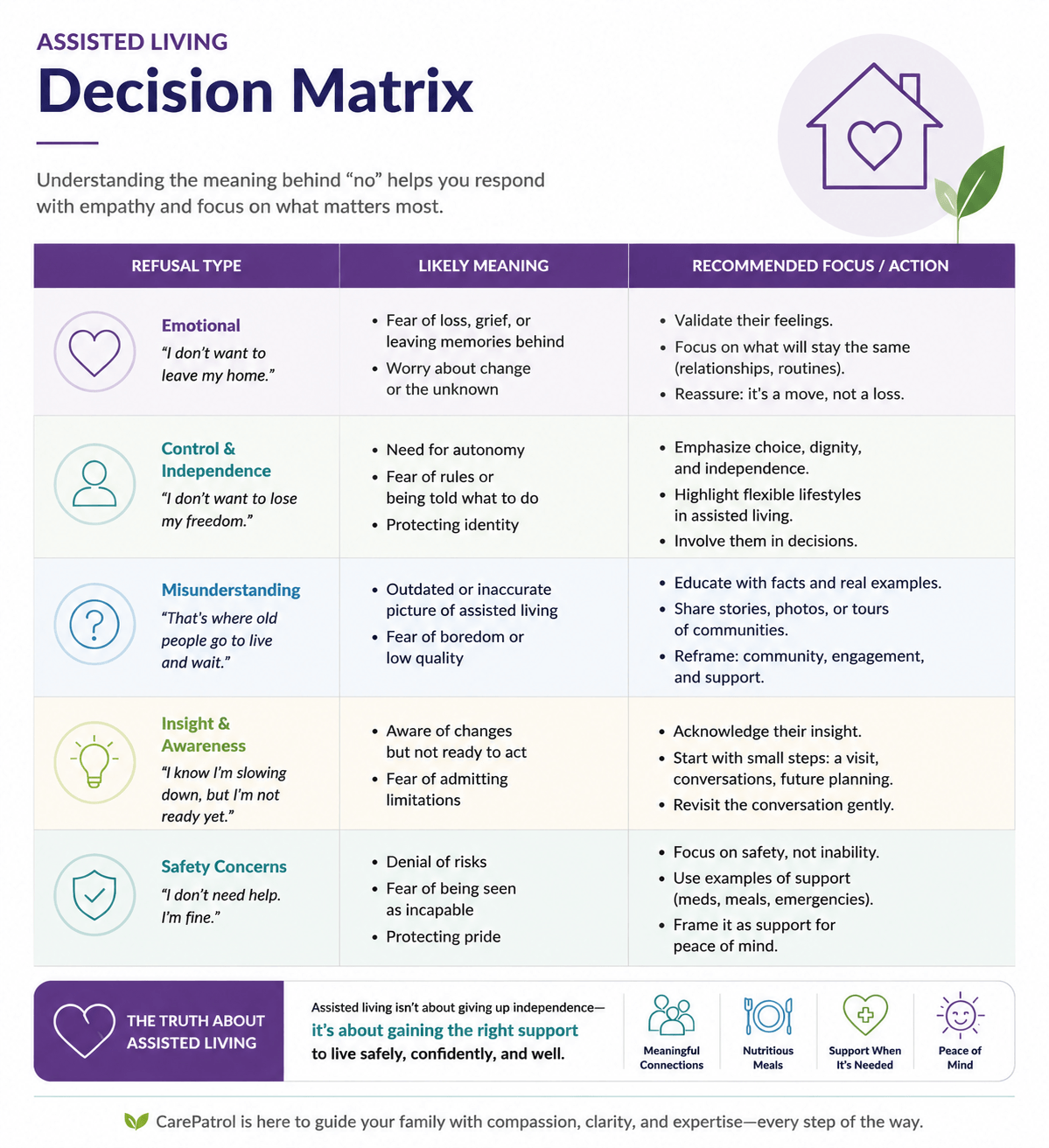
How to Match Refusal With the Right Care OptionThe right next step depends on what is actually happening day to day. A parent who needs help with meals and housekeeping may not need the same setting as someone who is wandering at night or forgetting medications because of dementia.
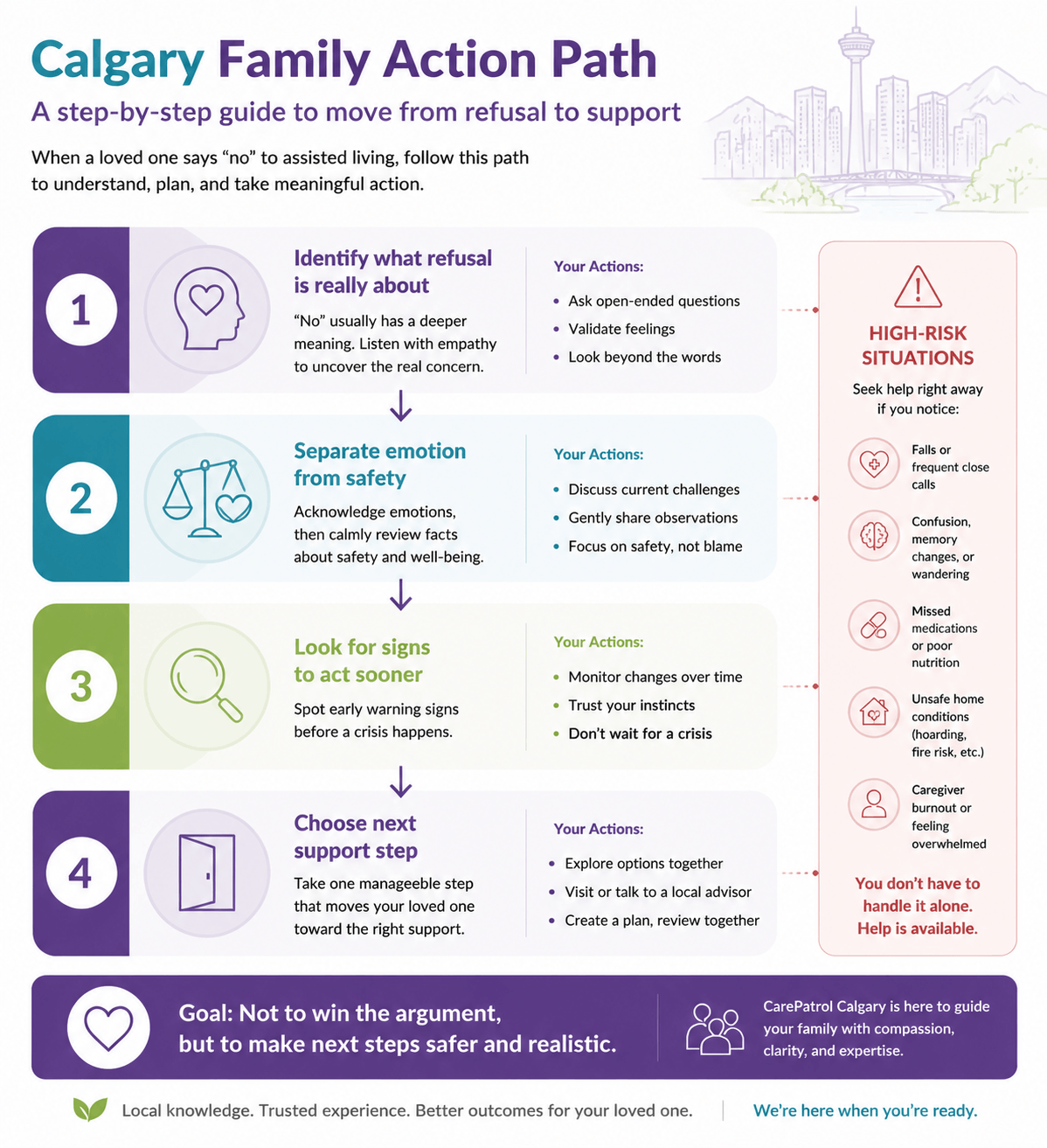
For cost and care comparisons, read Assisted Living vs. Memory Care in Calgary and Private vs. Public Memory Care in Calgary. Family Action PathWhen a parent refuses assisted living, the goal is to reduce risk, protect dignity, and help the family move from panic to a plan.
Before touring, use this related guide: Senior Living Tour Checklist: What to Look For When Touring a Facility. Why Families Work With CarePatrol CalgaryCarePatrol Calgary helps families compare assisted living, memory care, supportive living, retirement living, and long-term care options across the Calgary area. We help families understand care needs, prepare for tours, compare pricing, ask better questions, and identify communities that may be a better fit for the person’s health, preferences, budget, and family situation. Because refusal can be emotional, our role is often to help families slow the decision down, clarify what is urgent, and understand what options are realistic before pressure builds. FAQWhat should I do if my elderly parent refuses assisted living?Start by identifying why they are refusing. Fear, grief, cost concerns, privacy, denial, dementia symptoms, and loss of control can all show up as refusal. Document safety concerns and daily function before pushing for a decision.
Can I force my parent to move into assisted living in Alberta?A capable adult generally has the right to make their own living decisions, even when family members are worried. If there are serious concerns about capacity, abuse, neglect, or urgent safety, speak with appropriate healthcare, legal, or Alberta support resources.
Do I need a doctor’s referral first?Families can usually begin exploring private senior living, assisted living, retirement living, or memory care options without a doctor’s referral. Publicly funded care pathways may involve Alberta Health Services assessments or clinical referrals.
When is memory care better than assisted living?Memory care may be a better fit when dementia symptoms create safety risks, such as wandering, exit-seeking, unsafe cooking, aggression, nighttime confusion, or inability to follow medication and care routines.
What if my parent says they are fine but we see safety issues?Focus on specific examples instead of debating whether they are “fine.” For example, mention missed medications, falls, spoiled food, unpaid bills, or unsafe driving. Concrete observations are easier to discuss than broad concerns.
Should we tour senior living communities before our parent agrees?Yes, families often benefit from touring early. Touring helps you understand pricing, care levels, availability, staffing, and what questions to ask before there is a crisis.
How do we talk about assisted living without causing a fight?Use calm, specific language. Instead of saying “you need to move,” try “we need a safer plan for meals, medication, and nights.” Ask what they are afraid of losing and include them in choices whenever possible.
Can CarePatrol Calgary help us compare options?Yes. CarePatrol Calgary helps families compare senior living, assisted living, supportive living, memory care, and long-term care options based on care needs, budget, location, preferences, and timing.
Sources and Helpful Alberta ResourcesThis article was prepared using practical senior care experience, family transition patterns, and publicly available health and aging resources. It is educational and should not replace medical, legal, or clinical advice. |
ABOUT THE AUTHOR Certified Professional Consultant on Aging (CPCA)® and Values Based Care Specialist Shar supports Calgary families comparing assisted living, memory care, supportive living, retirement living, and continuing care options. CREDENTIALS
Certified Professional Consultant on Aging (CPCA®) 
Values Based Care Specialist RELATED GUIDESWhat Level of Care Does My Loved One Need? Assisted Living vs. Memory Care 
TALK WITH A LOCAL CARE ADVISORGet clear, practical help comparing assisted living, memory care, supportive living, retirement living, and continuing care options in Calgary. |